Sanada Yukimura Samurai Hero tour
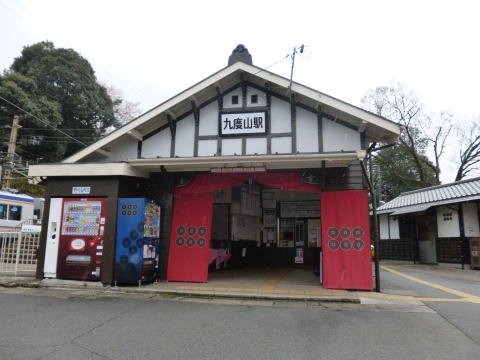
Kudoyama Station
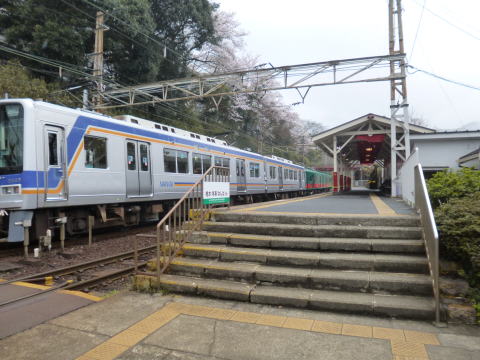
Kudoyama Station is a station on the Nankai Koya Line located in the town
of Kudoyama, Wakayama Prefecture.
It opened in December 1924, two years after
Nankai Railway merged with both the Osaka Koya Railway and the Koya Daishi
Railway.
In June 1944, the station became part of
Kinki Nippon Railway following a corporate merger, and in June 1947, it became
a Nankai Electric Railway station after the line was transferred.
The station has been unstaffed throughout
the day since 2013.
The average daily number of passengers
(boarding and alighting) was 693 in 2015.
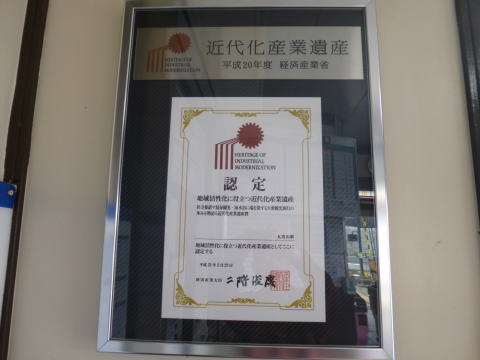
In 2008, Kudoyama Station—along with the
other stations between Kii-Shimizu and Koyasan, the Kinokawa and Niugawa
bridges, and the cable car line—was designated as a "Modern Industrial
Heritage Site."
The Kudoyama Sanada Museum 
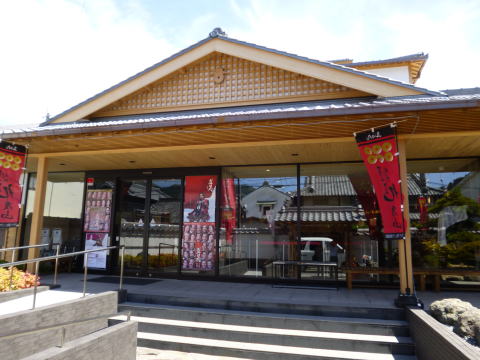
The Kudoyama Sanada Museum is located in the town of Kudoyama, Wakayama
Prefecture.
It opened in March 2016 with the aim of
passing down the story of three generations of the Sanada family—Masayuki,
Yukimura (Nobushige), and Daisuke—to future generations.
Sanada Masayuki (1547–1611) was a warlord
known for surviving the Warring States period by employing brilliant strategy
while based at Ueda Castle in Shinano Province, despite being surrounded by the
powerful Uesugi, Tokugawa, and Hojo clans.
Although he defeated the massive Tokugawa
army twice, he sided with the Western Army during the Battle of Sekigahara;
consequently, he was exiled to Rengejoin Temple on Mount Koya and spent the
remainder of his life in Kudoyama.
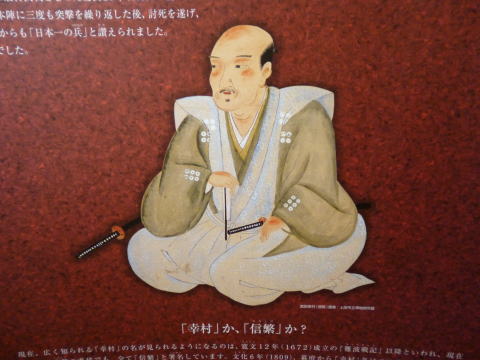
Sanada Yukimura (1567–1615), the second son
of Masayuki, spent time as a hostage of the Uesugi and Toyotomi clans.
Following the Battle of Sekigahara, he was placed under house arrest alongside
his father and lived in Kudoyama for 14 years.
He distinguished himself during the Winter Siege
of Osaka (1614) by constructing the "Sanada-maru" fortification, but
met a heroic end during the Summer Siege of Osaka (1615). He came within a
hair's breadth of cornering Tokugawa Ieyasu and was acclaimed as "Japan's
greatest warrior."
Sanada Daisuke (1603–1615) was born in
Kudoyama; he fought alongside Yukimura in the Summer Siege of Osaka and
committed *seppuku* (ritual suicide) with Toyotomi Hideyori at Osaka Castle.
The museum introduces the three generations
of the Sanada family's life of patient endurance in Kudoyama, while also
presenting their time in Ueda, the Siege of Osaka, and Sanada legends through
panels and video displays.
Additionally, an exhibition dedicated to
the NHK historical drama *Sanada-maru* (broadcast in 2016) was held at the
site.
It is a 10-minute walk from Kudoyama
Station on the Nankai Koya Line. Parking is available at the "Kaki-no-Sato
Kudoyama" roadside station.
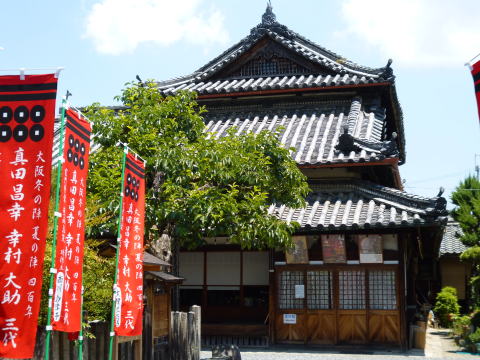
Zenmyosho-in 善名称院
Sanada-an 真田庵
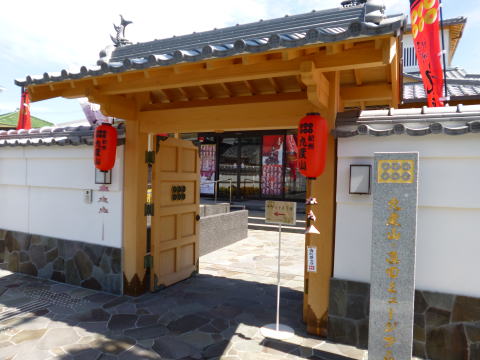
Sanada-an is located in Kudoyama Town, Ito District, Wakayama Prefecture;
officially, it is a temple of the Koyasan Shingon sect known as Zenmyosho-in.
It goes by the mountain name Karada-san,
and its principal image is the Bodhisattva Ksitigarbha (Jizo Bosatsu).
The site is traditionally believed to be where Sanada Masayuki and his
son Yukimura lived in exile after their defeat at the Battle of Sekigahara
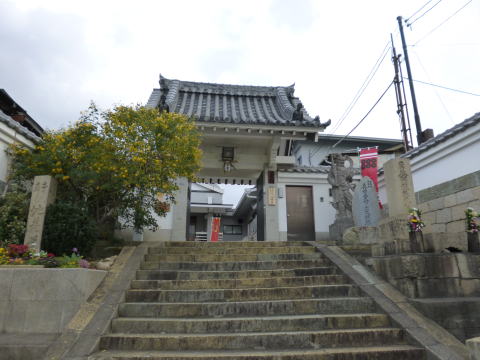
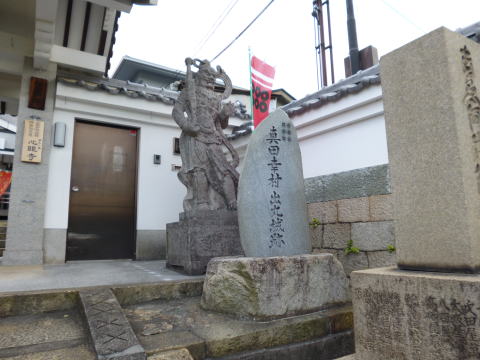
in 1600; the temple gate features carvings of the Sanada family crests
the "Six Coins" (Rokuren-sen) and the "Interlocked Wild
Geese" (Musubi-karigane).
The originof the temple date back to 1741,
when the monk Daian-shonin, a native of Kudoyama, converted the site of Sanada
Masayuki's grave into a temple.
Daian-shonin actively promoted the “Dosha-kaji” ritual (a rite involving
blessed sand and stones); he built a “Dosha-do” (Sand-Blessing Hall) to
house purified pebbles, and the current “San-ken-do” (Three-Bay Hall) rebuilt
during the Edo period features a “hogyo-zukuri” (pyramidal) roof.
The main hall is built in the “yatsumune-zukuri”
style, and the roof tiles feature the chrysanthemum crest, which the temple was
permitted to use by Emperor Momozono.
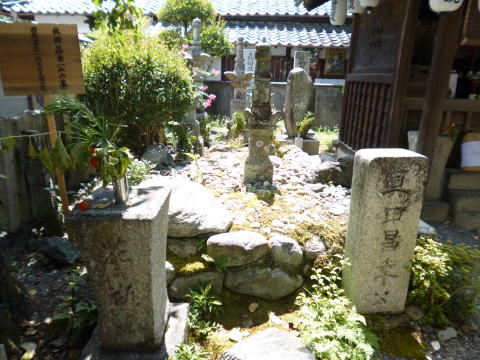
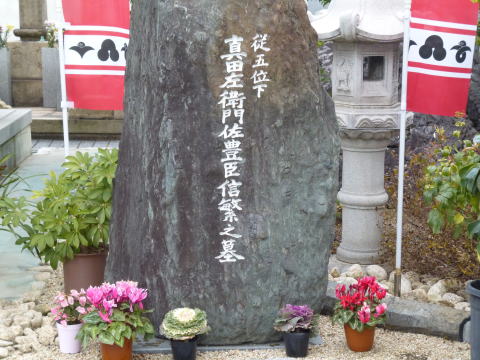
Sanada Masayuki's “Hokyoin-to”
(pagoda-style stone monument) remains on the grounds, and the site is
designated as a cultural property of Kudoyama Town under the name "Grave
of Sanada Awa-no-Kami Masayuki."
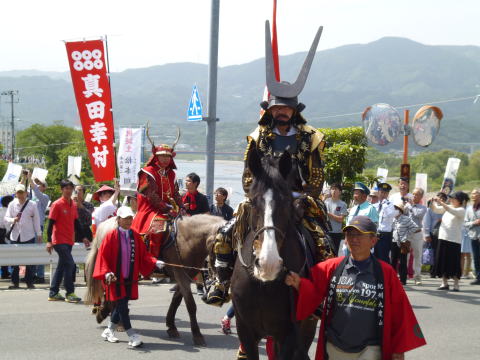
In May, the Sanada Festival is held,
centered around Sanada-an, to honor the memory of Sanada Yukimura; the event
features a procession of warriors, including the "Sanada Ten Braves"
(Sanada Juyushi).
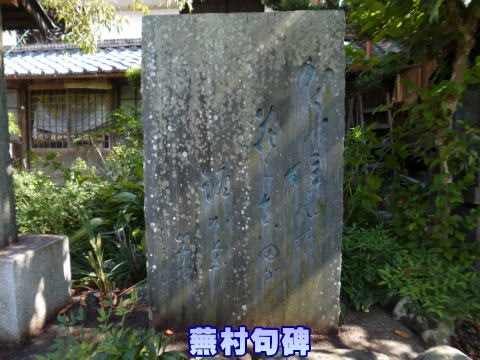
In front of the *San-ken-do* stands a stone
monument inscribed with a haiku by Buson: "Living in seclusion, one hears
the chanting of Sanada tales amidst the cherry blossoms."
Additionally, near the small wicket gate,
there is another Buson haiku monument: "Gather round the *kotatsu* and
speak of Sanada's Winter Campaign."
It is a five-minute walk from Kudoyama Station on the Nankai Electric Railway Koya Line. A municipal parking lot is located along the road on the south side.
Six coins (Rokumon-sen)
The Sanada clan of Japan's Sengoku and Edo periods used the "Rokumon-sen" (六文銭) as their family crest, which depicts six coins.
The meaning behind this crest is linked to a traditional belief in the
afterlife.
In Japanese Buddhist tradition, it was thought that when a person died,
they needed six coins to pay the ferryman to cross the Sanzu River, which
separates the living world from the afterlife.
By adopting the six coins as their crest, the Sanada clan symbolized their readiness for death, indicating their fearlessness in battle.
It was a declaration that they were always prepared to face death with
honor and would fight bravely without hesitation.
This strong connection to bravery and acceptance of mortality made the
Rokumon-sen a fitting symbol for the Sanada clan, known for their courage
and resilience.
Sanada Kofun (Sanada Burial Mound) 
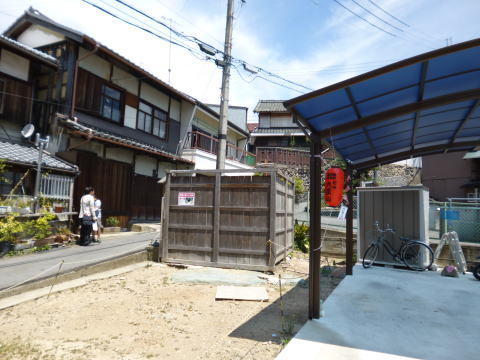
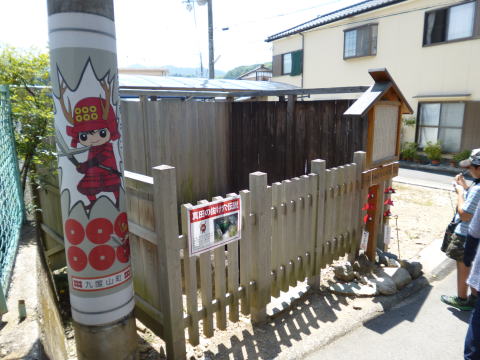
The Sanada Kofun (Sanada Burial Mound) is located in Kudoyama Town, Wakayama
Prefecture. It is associated with the legend of "Sanada's Escape Tunnel"
(Sanada no Nukeana).
Situated south of the Izumi Mountain Range,
it lies on the slope of a terraced plateau carved by the Kino and Niu Rivers.
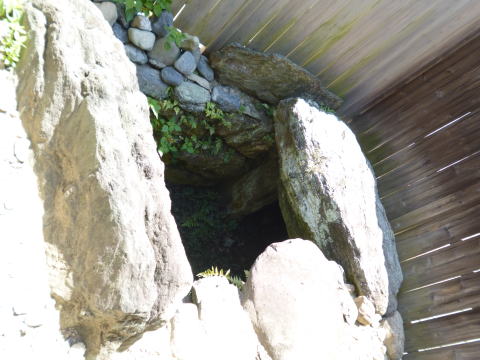
Although originally a circular burial mound
from the late Kofun period, the mound itself has been eroded, and the ceiling
stones of the stone chamber are missing, allowing one to look directly into the
underground stone chamber.
The chamber is a south-facing,
horizontal-entry type, constructed with side walls of stacked split stones and
a back wall and ceiling made of flat stone slabs.
The entrance passage measures 1.4 meters in
length, 1.7 meters in width, and 1.2 meters in height, while the main burial
chamber measures 3 meters in length, 1.8 meters in width, and 1.7 meters in
height.
A pillar stone stands at the boundary
between the entrance passage and the main chamber; it is believed to have
served as a door stone for the main chamber.
Artifacts recovered from the main chamber
include Sue ware cups, the stems of pedestal bowls, Haji ware dishes, and
disk-shaped stone objects.
Located 180 meters east of Sanada-an, the
site is associated with Sanada Yukimura—famous for fighting under the "Six
Coins" banner during the Summer Siege of Osaka (1614) —who is said to have
built a hermitage here.
Because the main chamber, enclosed by large
stones, resembles the entrance to a tunnel, the mound has been handed down in
local lore as "Sanada's Escape Tunnel."
The “Kiishoku Fudoki” (Chronicles of Kii
Province) records: "In the place called Furogaito in this village, there
are the remains of a burial mound... and the villagers call it 'Sanada's
Hole'."
A 10-minute walk from Kudoyama Station on
the Nankai Koya Line.
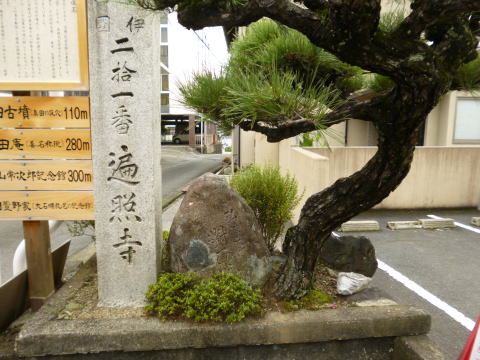
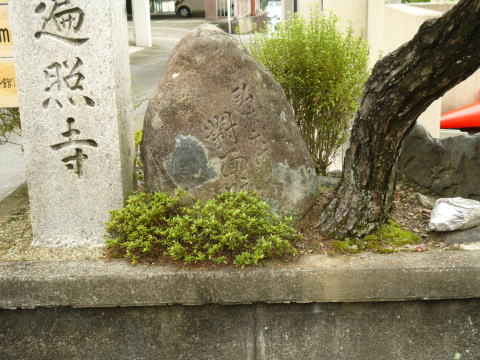
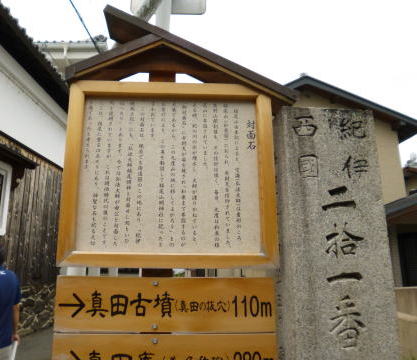
Taimen-ishi (The Meeting Stone) 
Taimen-ishi (The Meeting Stone) is a historic site located in the town
of Kudoyama, Wakayama Prefecture.
According to the
*Makio-san Yuraiki* (Chronicle of the Origins of Mount Makio), Kobo Daishi
(Kukai) worshipped Benzaiten while living on Mount Makio (in Izumi Province)
during his childhood.
Even after
founding the monastic complex on Mount Koya, he remained deeply devoted to this
deity, making the journey to Mount Makio in Izumi nine times every month.
On one occasion,
when the Kino River had swollen and Kobo Daishi was unable to cross, Benzaiten
appeared upon this stone—known as the "Go-taimen-ishi" (Stone of the
Divine Meeting)—and delivered a revelation:
"Since the
journey to Izumi for worship is an arduous task, it would be fitting to
relocate the deity to this land of Kudoyama."
It is said that he
subsequently enshrined the deity here; the shrine remains today below Kudoyama
Junior High School and is affectionately known as "Myojin-san."
The stone came to
be called Taimen-ishi because it was the spot where he heard this divine
message.
The *Kii Zoku
Fudoki* (Sequel to the Topographical Records of Kii Province) also records:
"Taimen-ishi: There are two stones on the village road; tradition holds
that this is the place where Kobo Daishi met with the deity of Makio-san
Myojin."
Since the Meiji
era, the site has also been described as the place where Kobo Daishi met with
his mother.
A six-minute walk
from Kudoyama Station on the Nankai Koya Line.
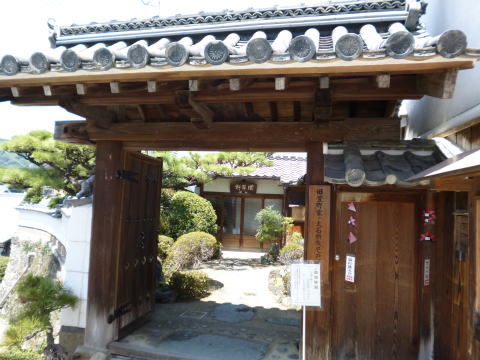
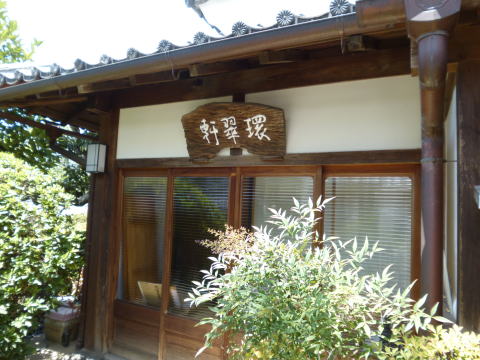
The Former Kayano Residence

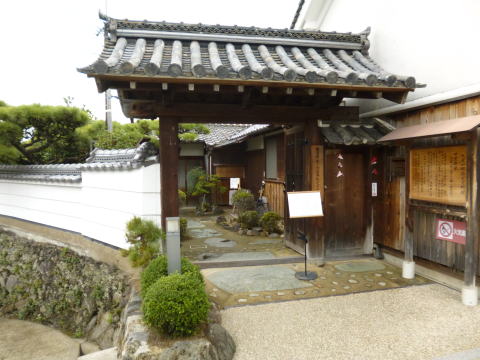
The Former Kayano Residence is a structure designated by the town of Kudoyama,
Wakayama Prefecture.
Originally, the site was a temple of the Koyasan Kogi Shingon sect known as Fudō-in, established in 1703 (the 16th year of the Genroku era) by Yūson of Henjō-ji Temple.
During the tenure of the fourth head priest, Shinsei, the temple also served as Shinzō-in (a sub-temple of Mount Kōya); the head priest would descend from the mountain to stay there during the winter to escape the cold, effectively using the site as a *satobō* (a lowland residence for monks).
Three of its buildings—the main house, the gate, and the storehouse (*dozō*)—were
designated as Tangible Cultural Properties (Structures) by Kudoyama Town
on June 28, 1996, in recognition of their preservation of the architectural
style of a temple used as a winter retreat during the mid-Edo period.
In February 2009, ownership of the three Kayano family buildings was transferred to Kudoyama Town, and on December 25 of that year, the property was officially renamed the "Former Kayano Residence."
Nun Junkyō Ōishi (born Yone Ōishi; 1888–1968) was born in the Dōtonbori district of Osaka in 1888.
In 1905, at the age of 17, she fell victim to a frenzied attack by her adoptive father, Manjirō Nakagawa—an incident in which he slashed six people—and lost both of her arms.
While striving to overcome her tragic circumstances, she one day observed a canary feeding its chicks with its beak; this inspired the realization that she could use a brush with her mouth even without hands, and she subsequently devoted every spare moment to practicing calligraphy.
At the same time, she pursued rigorous training in the arts, mastering classical literature, *waka* poetry, and painting.
From around the age of 40, she dedicated herself to the Buddhist path and to promoting independence education for people with physical disabilities, while also focusing her efforts on welfare counseling. Later, through an acquaintance of Masanosuke Kayano—the head of the Kayano family—she deepened her ties with the family. In 1933, with the Kayano couple (Masanosuke and Tatsu) serving as her sponsors, she entered the priesthood at Tentoku-in Temple on Mount Koya under the guidance of High Priest Tentoku Kanayama, receiving the religious name "Junkyo."
She maintained a close relationship with the Kayano family, frequently staying at their home, and works of calligraphy and painting created during those visits are currently on display.
She was active in various fields, notably becoming the first member from East Asia of the Association of Mouth and Foot Painting Artists of the World in 1962. She passed away at the age of 80 in 1968 at Kasho-an in Yamashina, Kyoto.
To honor the remarkable achievements of Nun Junkyo Oishi, Kudoyama Town has—since 2010—operated the former Kayano residence as the Nun Junkyo Oishi Memorial Hall, where her calligraphy and other artifacts are preserved and exhibited.
The "Arm Mound" (Udezuka) and the grave of Nun Junkyo Oishi are located at the Okunoin area of Mount Koya.
A 7-minute walk from Kudoyama Station on the Nankai Koya Line.
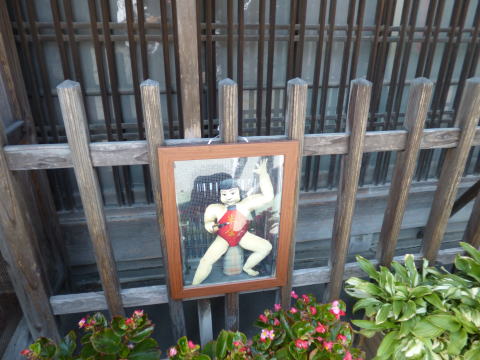
The "Komekin" statue of Kintoki 
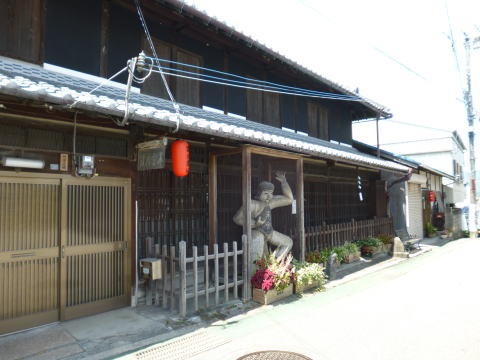
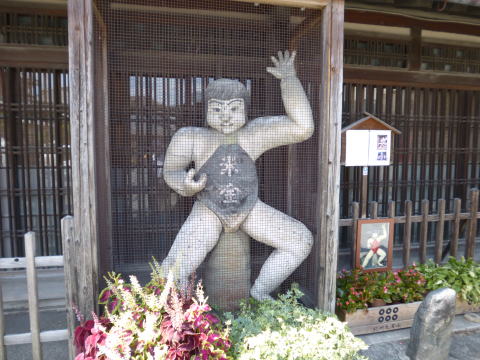
The "Komekin" statue of Kintoki is located in the town of Kudoyama,
Wakayama Prefecture.
Sakata no Kintoki—known in his childhood as
Kintaro—is a figure who appears in works such as *Konjaku Monogatarishu* (Tales
of Times Now Past).
He was one of the "Four Guardian
Kings" (Shitenno) serving Minamoto no Yorimitsu and is said to have been a
real warrior during the late Heian period.
A child of prodigious strength raised on
Mt. Ashigara in Sagami Province, he was discovered by Minamoto no Yorimitsu and
reportedly participated in campaigns such as the subjugation of Shuten-doji on
Mt. Oe.
Kintaro is often depicted as a young boy
and is a popular subject for the dolls displayed during the Boys' Festival in
May.
This work was created by the ceramic artist Shohei Nanki (real name: Shohei
Ibata) (1884-1920) standing over two meters tall, such a large bust is
considered a rarity nationwide.
In the early Taisho era, Shohei built a
kiln on Higashiyama—supported by local volunteers in Kudoyama—and devoted
himself to pottery making.
In 1916, he developed a new kiln site at
Kunugiyama in Sema, but the following year he was invited to Furoken on Mt.
Nachi, where he pioneered the "Ginryu-yaki" style; he passed away in
1920 at the age of 44.
His works—ranging from three-dimensional
figures like Buddhist statues and animals to vessels such as tea sets, incense
burners, plates, and jars—are characterized by a distinctive, rustic charm that
highlights the unique qualities of Kudoyama clay; consequently, his pottery is
known as "Kudoyama-yaki" or "Shohei-yaki."
A 10-minute walk from Kudoyama Station on
the Nankai Koya Line.
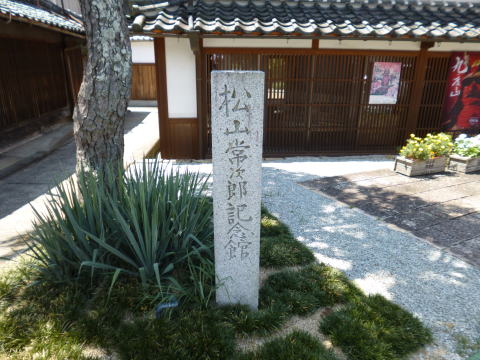
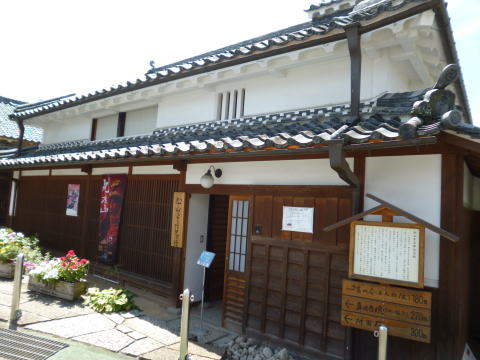
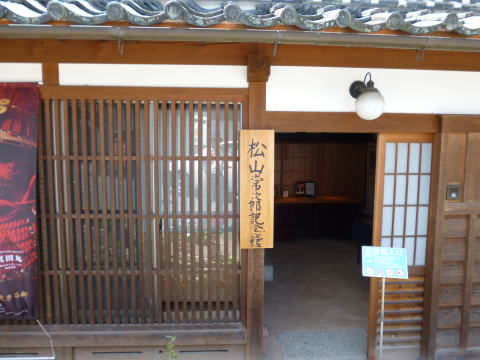
Matsuyama Tsunejiro Memorial Museum 
Matsuyama Tsunejiro Memorial Museum is located in Kudoyama Town, Wakayama
Prefecture.
Born in Kudoyama, Tsunejiro Matsuyama
(1884–1961) achieved success in civil engineering projects in Korea starting in
1915 and served as a member of the House of Representatives from 1920 to 1946.
The museum opened in 2003 through the
dedicated efforts of his eldest daughter, Michiko Hirayama, and the Matsuyama
family; it exhibits personal belongings and documents related to Matsuyama’s
political career while also showcasing his achievements as a businessman.
His eldest daughter, Michiko, married the
artist Ikuo Hirayama and served as a "Cultural and Tourism
Ambassador" for Kudoyama Town. Works by Ikuo Hirayama are also on display
within the museum.
The building is a traditional wooden
private house featuring a *shikoro-zukuri* style roof and was restored by
architect Ryusuke Fujioka.
A 10-minute walk from Kudoyama Station on the
Nankai Koya Line.
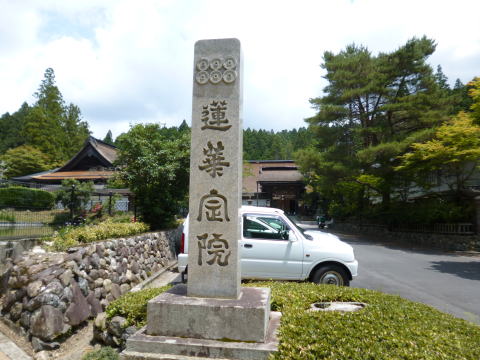
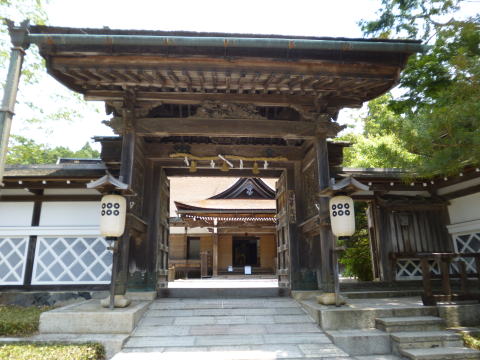
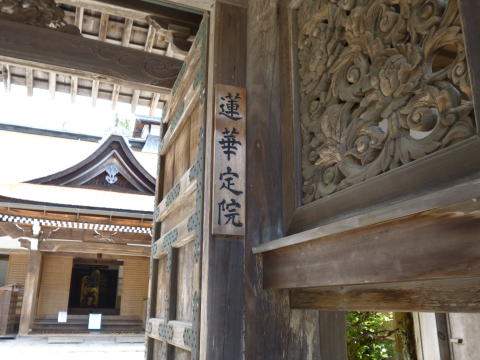
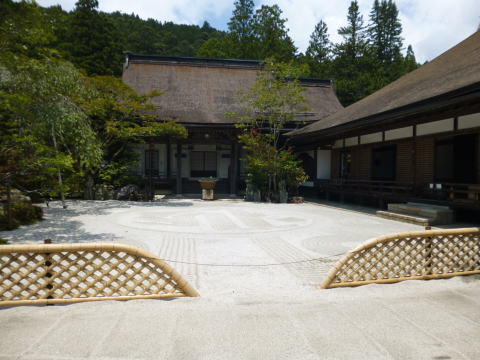
Rengejo-in temple 
Rengejoin is a special head temple of the Shingon sect located in Isshindani,
Koya-cho, Wakayama Prefecture.
The principal image is the Amida Buddha (made by the Buddhist carver Kasuga).
It is said to have originated as Okubo Nembutsu-in, where Gyosho Shonin
(1130-1217) began practicing Nembutsu(chanting) in his later years, and
was built during the Kenkyu era (1190-99).
This is where Samurai Sanada Masayuki and Yukimura first sought refuge
after being ordered to live in seclusion after their defeat in the Battle
of Sekigahara.
The Sanada clan's flag, six-mon coins, are displayed throughout the temple.
Later, they were allowed to live with their wives and children, and moved
from Mount Koya, where women were not allowed to enter at the time, to
Kudoyama, which was on temple land.
The temple has around 150 documents dating from the late Muromachi period to the end of the early modern period.
Many of the documents are deeds for lodgings, including those of the Tomono
clan of Shinano Tomono-sho and Sanada Masayuki of Sanada-go, and the temple
served as a lodging facility in various regions of Shinano until the end
of the early modern period.
Letters from Arima Harunobu and Asano Yukinaga, known as Christian daimyo, have also survived.
The temple treasure, a sword made by Fujiwara Kunihiro, was made by Oki Shonin (1536-1608) and donated to Rengejoin, and is designated as an Important Cultural Property of Japan.
The handwritten letters of Sanada Yukimura (one volume of Shochu no Bun and two letters of Amano Pilgrimage Notices) were written when Yukimura was retiring to Kudoyama, and are designated as Cultural Properties of Wakayama Prefecture.
Take the bus from Koyasan Station to Kongobuji-mae busstop, and walk for ten minutes.
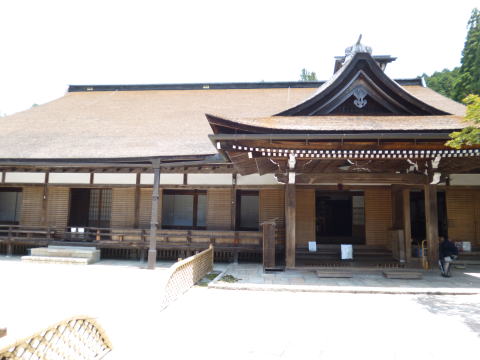
Six coins clan's flag
The Sanada family adopted the "Rokumonsen," or Six Mon Coins,
as their family crest for a symbolic reason.
In Japanese culture, it was believed that six coins were the necessary
fare to cross the river to the afterlife.
By choosing this emblem, the Sanada family demonstrated their preparedness to face death with courage and honor in battle.
It symbolized their warrior spirit and readiness to sacrifice their lives if necessary, reflecting the values of bravery and loyalty that were important to them.
The reason why the six coins are referred to as the fare for crossing the
Sanzu River relates to the concept of Japanese Buddhism.
The Sanzu River is a mythical river in the Buddhist underworld, symobolizing
the boundary between life and death.
According to belief, souls must cross this river to reach the afterlife,
and they pay a fare of six coins to the ferryman for the crossing.
The consept of six mon coins stems from both numerical symbolism and practical
considerlations.
The number six represents the six realms of existence in Buddhist cosmology,
signifying the cycle of reincarnation.
The value of six mon coins is relatively small, making it accessible to
people from all social classes.
This reflects the idea that all souls, regardless of their early status,
must make the journey across the Sanzu River.
Thus, the six mon coins serve as a symbolic fare for traversing the boundaries
between life and death in Japanese Buddhist tradition.
Shingan-ji Sanada Yukimura's grave 
Sanadayama Shingan-ji is a Jodo-sect temple located in Tennoji Ward, Osaka
City.
Its principal image is a seated statue of
Amida Buddha, and the temple is one of the stops on the "Osaka New
48-Temple Amida Pilgrimage."
In 1622, the priest Hakumu erected the
temple buildings to pray for the repose of the souls of the Sengoku-period
warrior Sanada Yukimura and his father.
The temple's emblem since its founding has
been the Sanada family's "Six Coins" (Rokumonsen) crest, which is
also carved in relief on the doors of the current main gate.
The site is said to be where the
"Sanada-maru" (Sanada Barbican)—a fortification defended by Sanada
Yukimura during the Winter Siege of Osaka—was constructed; a stone monument
reading "Sanada Yukimura: Sanada-maru Site" stands in front of the
gate.
The temple grounds contain Sanada Yukimura's grave; the headstone, erected
to mark the 400th anniversary of his death, bears the inscription: "Grave
of Sanada Saemon-no-suke Toyotomi Nobushige (Junior Fifth Rank, Lower Grade)."
The name "Sanada Yukimura" only
came into widespread use during the mid-Edo period (18th century), more than a
century after his death; in his last surviving letter, he signed his name as
"Saemon-no-suke Nobushige."
The surname "Toyotomi" was established by Toyotomi Hideyoshi;
in addition to relatives such as Hidenaga, powerful daimyo—including Mori
Terumoto and Tokugawa Hidetada—also used the name.
A five-minute walk from Tamatsukuri Station
on the Osaka Municipal Subway.
Six coins (Rokumon-sen) crest
The Sanada clan of Japan's Sengoku and Edo periods used the "Rokumon-sen" (六文銭) as their family crest, which depicts six coins.
The meaning behind this crest is linked to a traditional belief in the
afterlife.
In Japanese Buddhist tradition, it was thought that when a person died,
they needed six coins to pay the ferryman to cross the Sanzu River, which
separates the living world from the afterlife.
By adopting the six coins as their crest, the Sanada clan symbolized their readiness for death, indicating their fearlessness in battle.
It was a declaration that they were always prepared to face death with
honor and would fight bravely without hesitation.
This strong connection to bravery and acceptance of mortality made the
Rokumon-sen a fitting symbol for the Sanada clan, known for their courage
and resilience.
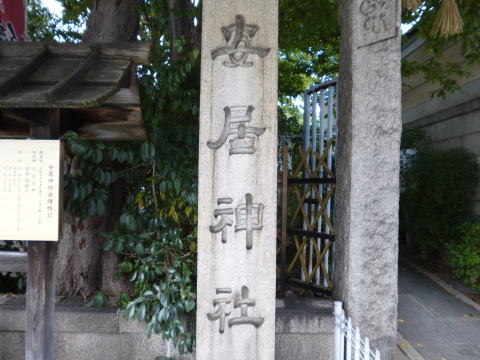
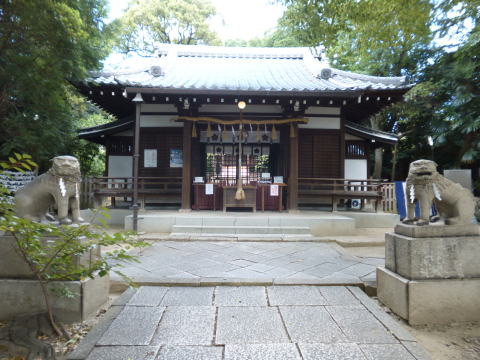
Sanko Shrine 
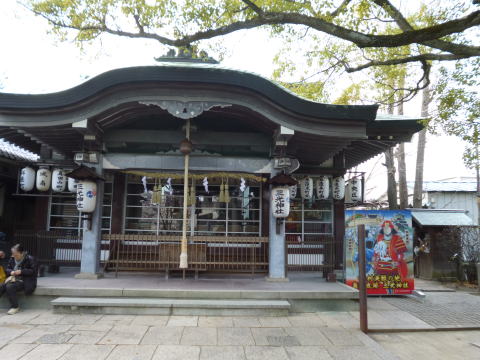
Sanko Shrine is located in Tennoji Ward, Osaka City.
The enshrined deities are
Amaterasu-omikami, Tsukuyomi-no-mikoto, and Susanoo-no-mikoto.
It was founded during the reign of the 18th
Emperor Hanzei and was formerly known as Himeyama Shrine (a name derived from
the ancient "Hime no Matsubara" pine grove).
The shrine has been served for 86
generations by the Takekawa clan, descendants of Takeuchi no Sukune, who was
the shrine's priest at the time of its founding.
It is known nationwide as a shrine
dedicated to a deity that wards off “chufu” (paralysis or stroke-like
ailments), and a grand prayer festival is held there from June 1st to 7th.
It enshrines Jurojin (identified here as
Takeuchi no Sukune), one of the Seven Lucky Gods, and is a stop on the Osaka
Seven Lucky Gods pilgrimage, which takes place on the 7th of every month.
This site is said to have housed an outpost
(Sanada-maru) of Osaka Castle; during the Winter Siege of Osaka in 1614, Sanada
Yukimura reportedly constructed an outpost here—which he named Engetsu-jo
(Crescent Moon Castle)—and ordered the digging of a secret tunnel connecting it
to the main castle.
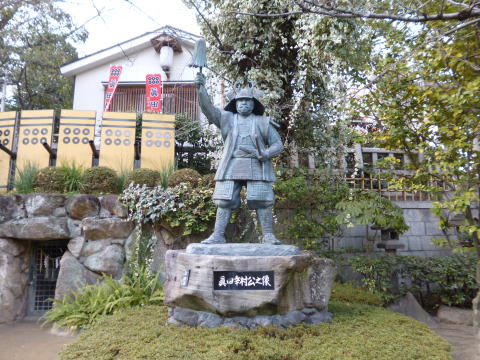
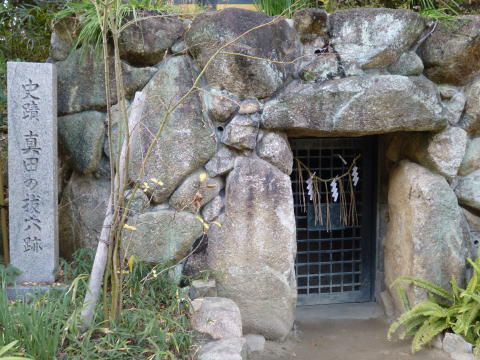
Beside the stone steps leading to the main
hall, there is a statue of Sanada Yukimura and a stone-chamber-style horizontal
tunnel known as the "Historic Site: Sanada's Secret Tunnel"; this
tunnel is opened to the public on the first Sunday of November.
Access: A 3-minute walk from Tamatsukuri
Station on the Osaka Municipal Subway Nagahori Tsurumi-ryokuchi Line, or a
5-minute walk from Tamatsukuri Station on the JR Osaka Loop Line.
Yasui Shrine 
Yasui Shrine is located in Tennoji Ward, Osaka City.
The enshrined deities are
Sukunahikona-no-Kami and Sugawara no Michizane.
While the exact origins of the shrine's
dedication to Sukunahikona-no-Kami are unclear due to the loss of historical
records, it is said to date back to ancient times.
This deity is revered as the ancestral god
of medicine, healing rituals, and wisdom.
Sugawara no Michizane is said to have been
enshrined here in 942 (the fifth year of the Tenkyō era) to commemorate a time
when he stopped to rest at this location—finding refuge from rough seas—while
en route to his exile in Dazaifu.
The shrine is also known as "Daimaru
Tenjin" because Hikouemon Shimomura, the founder of the Daimaru business,
was a devout worshipper here.
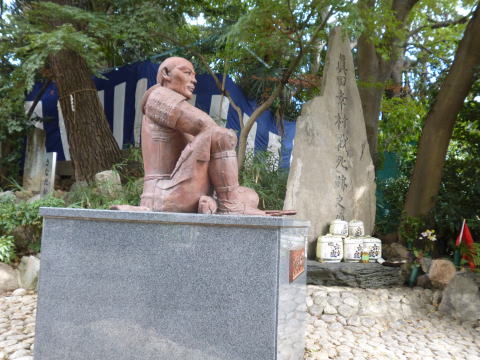
During the Summer Siege of Osaka (1615), Sanada Yukimura reportedly fought
his way to the very brink of Tokugawa Ieyasu's position but failed to capture
him; he is said to have breathed his last and died in battle at this very
spot. A statue of Sanada Yukimura resting and a stone monument marking
the site of his death have been erected here.
The shrine's annual festival takes place on
April 25, and the Yukimura Festival is held in May.
It is a six-minute walk from Shitennoji-mae
Yuhigaoka Station on the Osaka Municipal Subway.